English Ivy: Care and Pests
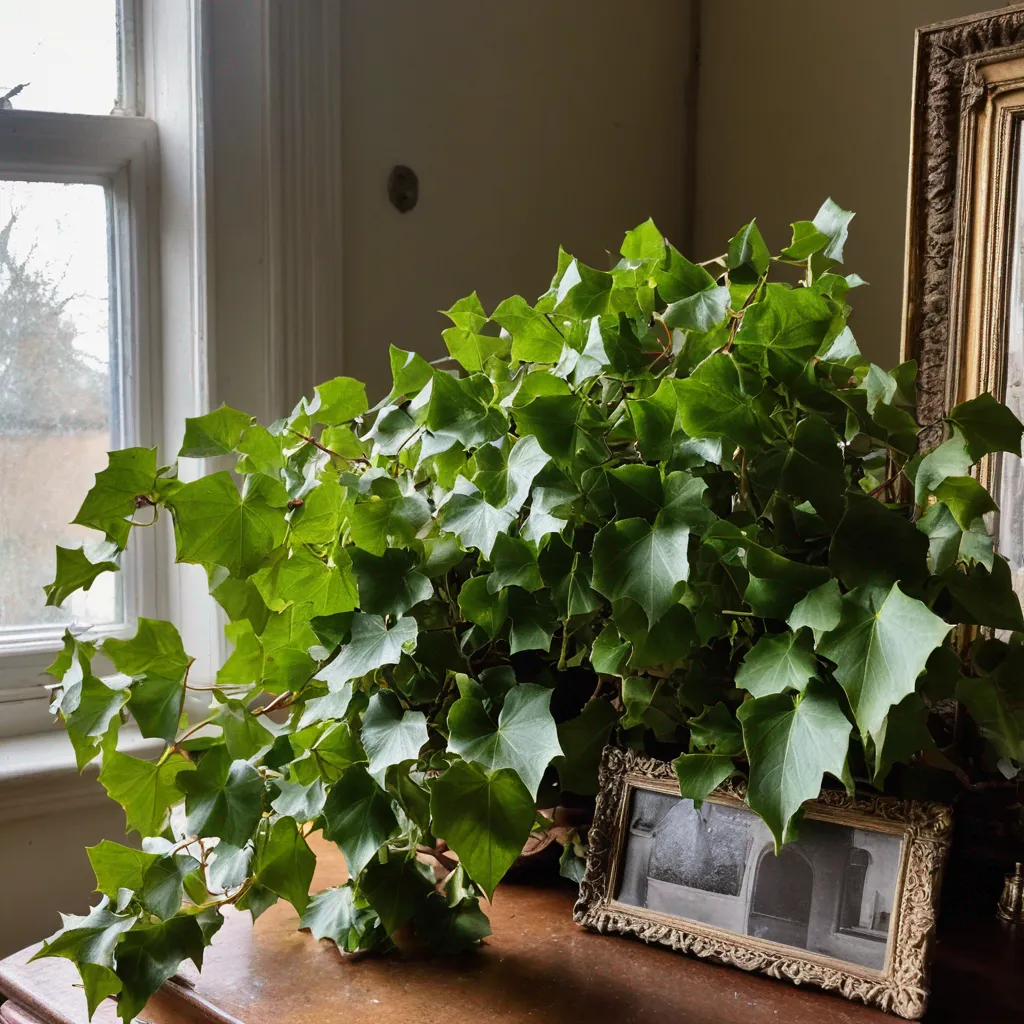
English Ivy: Care and Pests
Section titled “English Ivy: Care and Pests”I killed my first English Ivy within three months. The second one lasted about six weeks. Both times, I thought I was doing everything right. Turns out, Ivy is one of those plants that looks easy at the garden center but has very specific opinions about how it wants to live indoors.
If you’re struggling with yours, or if you just brought one home and want to avoid my mistakes, this is what I’ve learned after finally keeping one alive for over a year.
Why Ivy is hard to grow indoors
Section titled “Why Ivy is hard to grow indoors”The main problem with English Ivy is that it wants to live outside. I know that sounds obvious, but hear me out. This plant evolved to climb up the sides of buildings in England, where it’s cool, damp, and the air actually moves. Your living room is probably 70 degrees year-round with zero humidity and still air. That’s basically the opposite of what Ivy wants.
According to research from the University of Georgia Extension, English Ivy (Hedera helix) thrives in temperatures between 50 and 70 degrees Fahrenheit. Most of us keep our homes warmer than that, especially in winter. When I finally moved mine to the coolest room in my apartment (a north-facing bedroom that stays around 65 degrees), it stopped throwing tantrums.
The humidity thing is even worse. Ivy likes humidity levels around 40 to 50 percent. My apartment in winter hovers around 25 percent. That dry air is like sandpaper to Ivy leaves. They get crispy at the edges, turn brown, and eventually fall off. I tried misting mine every day for a while, but that only helped marginally. What actually worked was putting it near my other plants so they could create a little humidity pocket together.
The other issue is air circulation. In nature, Ivy gets constant gentle breezes. Indoors, the air just sits there unless you have a fan running. Stagnant air plus any moisture on the leaves equals a perfect breeding ground for fungal problems. I learned this the hard way when my second Ivy developed some weird brown spots that spread like crazy. Now I keep a small fan on low in the room where my plants live, just to keep things moving.
If you’re thinking about getting an Ivy, ask yourself if you can give it a cool spot with decent humidity. If your answer is no, maybe skip it. I almost gave up on them entirely before I found the right location in my place.
Spider mites: The #1 enemy
Section titled “Spider mites: The #1 enemy”Let’s talk about the thing that actually killed my first two Ivies. Spider mites. These tiny monsters love English Ivy more than almost any other houseplant. You won’t see them at first. What you’ll see is a faint speckling on the leaves, like someone took a pin and poked tiny holes everywhere. Then you’ll see some webbing, super fine, usually where the leaves meet the stem. By the time you see actual webs, you’ve got a serious infestation.
Spider mites thrive in the exact conditions most of us create indoors: warm and dry. According to Colorado State University Extension research, spider mites reproduce faster when humidity is low and temperatures are high. One female can lay hundreds of eggs. The whole life cycle from egg to adult takes about a week in warm conditions. Do the math on that and you’ll understand why a small problem becomes a nightmare so fast.
I didn’t catch the mites on my first Ivy until the plant was basically dead. The leaves were yellow and falling off. When I finally looked closely with a magnifying glass, I could see tiny red dots moving around. Too late.
The second time, I caught them earlier but made the mistake of only treating the Ivy. Spider mites are nomads. They’ll crawl or float on air currents to your other plants. I had to treat everything in my plant corner, even the plants that looked fine. That was annoying.
Here’s what actually works. First, isolate the plant immediately. Take it away from your other plants. Then, take it to the shower and blast it with water. Get the undersides of every single leaf. This knocks off a lot of the mites and eggs. Do this weekly.
Between showers, I spray my Ivy with a mix of water and a few drops of dish soap. The Iowa State University Extension notes that insecticidal soaps work by breaking down the outer coating of soft-bodied insects like spider mites. I put about a teaspoon of plain dish soap in a spray bottle with water and spray the whole plant, especially the undersides, every three days or so.
Some people use neem oil. I tried it once and it made my leaves look greasy and weird, plus my cat hated the smell. The soap and water method has kept my current Ivy mite-free for months.
The best defense, though, is prevention. Keep your Ivy in a cooler room. Increase humidity however you can. Check the undersides of leaves every time you water. If you see any speckling, act immediately. Don’t wait.
 Above: A close up look at the symptoms.
Watering and light needs
Section titled “Watering and light needs”Ivy wants to be evenly moist but not soaking wet. That’s harder than it sounds. When I first started, I treated it like my pothos and let it dry out between waterings. Bad idea. The leaves crisped up and turned brown. Then I overcompensated and kept it too wet. The stems got soft and mushy at the base.
What finally worked was checking the soil every few days and watering when the top inch feels dry. In my cool bedroom, that’s about every five to seven days in winter and every three to four days in summer. Your schedule will be different depending on your conditions. Stick your finger in the soil. That’s the only way to know.
The pot matters more than I thought it would. Ivy does not like to sit in water. I use a pot with drainage holes and a well-draining potting mix. Regular houseplant soil works fine. After I water, I let all the excess drain out completely. If water sits in the saucer, I dump it.
One thing that surprised me is how much Ivy can handle underwatering compared to overwatering. I forgot about mine for almost two weeks once (life got busy) and when I came back, it was droopy but not dead. I watered it thoroughly and it perked back up within a day. But when I’ve overwatered, even once, I’ve seen root rot start. The stems turn black at the soil line and the plant just gives up.
As for light, Ivy is flexible but has preferences. It can survive in low light, but it won’t thrive. The leaves get farther apart on the stems and the color fades. Mine sits in bright indirect light from a north-facing window and it’s happy there. According to the University of Minnesota Extension, Ivy can handle some direct morning sun but afternoon sun will burn the leaves.
I tried growing one in a darker corner once using a grow light. It worked okay, but the plant grew much slower than my window plant. If you’re going the grow light route, keep it on for about 12 hours a day and position it a foot or so above the plant.
Keeping it bushy not straggly
Section titled “Keeping it bushy not straggly”This is the part nobody tells you when you buy an Ivy. Left alone, it will grow long, thin vines with leaves spaced far apart. It looks scraggly and sad. The key to a full, bushy Ivy is trimming it regularly. I was scared to cut mine at first because it was barely alive. Once it stabilized, I started pinching back the growing tips and the difference was huge.
Every few weeks, I pinch off the newest growth at the end of each vine. Just use your fingers and snap it off right above a leaf node (that’s the bump on the stem where leaves come out). This forces the plant to branch out from lower down on the stem. Instead of one long vine, you get two or three shorter ones. Do this consistently and your Ivy will fill out.
If your Ivy is already leggy, you can cut it back harder. I did this in spring when my plant had several vines that were two feet long with only a few leaves. I cut them back to about six inches from the base. It looked ridiculous for a while, like I had murdered it, but within a month it pushed out new growth everywhere and looked ten times better.
The cuttings from trimming don’t have to go to waste, which brings me to the next part.
 Above: The tools you need to fix this.
Propagating Ivy cuttings
Section titled “Propagating Ivy cuttings”Ivy is absurdly easy to propagate. Honestly, it’s easier to propagate than it is to keep alive. Every time I trim mine, I stick the cuttings in water and they root within two weeks. It’s almost impossible to fail.
Here’s the process. Take a cutting that’s about four to six inches long. Make sure it has at least two or three leaves. Cut right below a leaf node using clean scissors. Pull off the bottom leaves so you have a bare stem at the end.
Stick the cutting in a glass of water. Put the glass somewhere with indirect light. Don’t let it sit in direct sun or the water will heat up and cook the stem. Change the water every few days to keep it fresh.
Within a week, you’ll see tiny white bumps forming at the leaf nodes. Those are root initials. By two weeks, you’ll have actual roots, usually a quarter inch or longer. Once the roots are an inch long, you can plant the cutting in soil.
I’ve also rooted Ivy directly in soil, but I prefer water because I can see what’s happening. If you want to try soil, stick the cutting about an inch deep in damp potting mix and keep it moist (not soaking) until you see new leaf growth. That usually takes three to four weeks.
The North Carolina State University Extension notes that Ivy cuttings root best in spring and summer when the plant is actively growing, but I’ve had success year-round as long as I keep them in a bright spot.
I’ve given away probably a dozen Ivy cuttings at this point. It’s a nice way to share a plant that, let’s be honest, most people will also struggle with. But at least the cuttings are free.
English Ivy is not a beginner plant, no matter what the care tag says. It wants specific conditions and it will punish you if it doesn’t get them. But if you can give it cool temperatures, decent humidity, consistent moisture, and regular trims, it’ll reward you with beautiful trailing vines. Just watch out for those spider mites.
References
Section titled “References”Colorado State University Extension. “Spider Mites.” Department of Horticulture and Landscape Architecture.
Iowa State University Extension and Outreach. “Insecticidal Soaps for Garden Pest Control.” Horticulture and Home Pest News.
North Carolina State University Extension. “Plant Propagation by Stem Cuttings.” Department of Horticultural Science.
University of Georgia Extension. “Growing Indoor Plants with Success.” Cooperative Extension Service.
University of Minnesota Extension. “Growing Ivy Indoors.” Department of Horticulture.